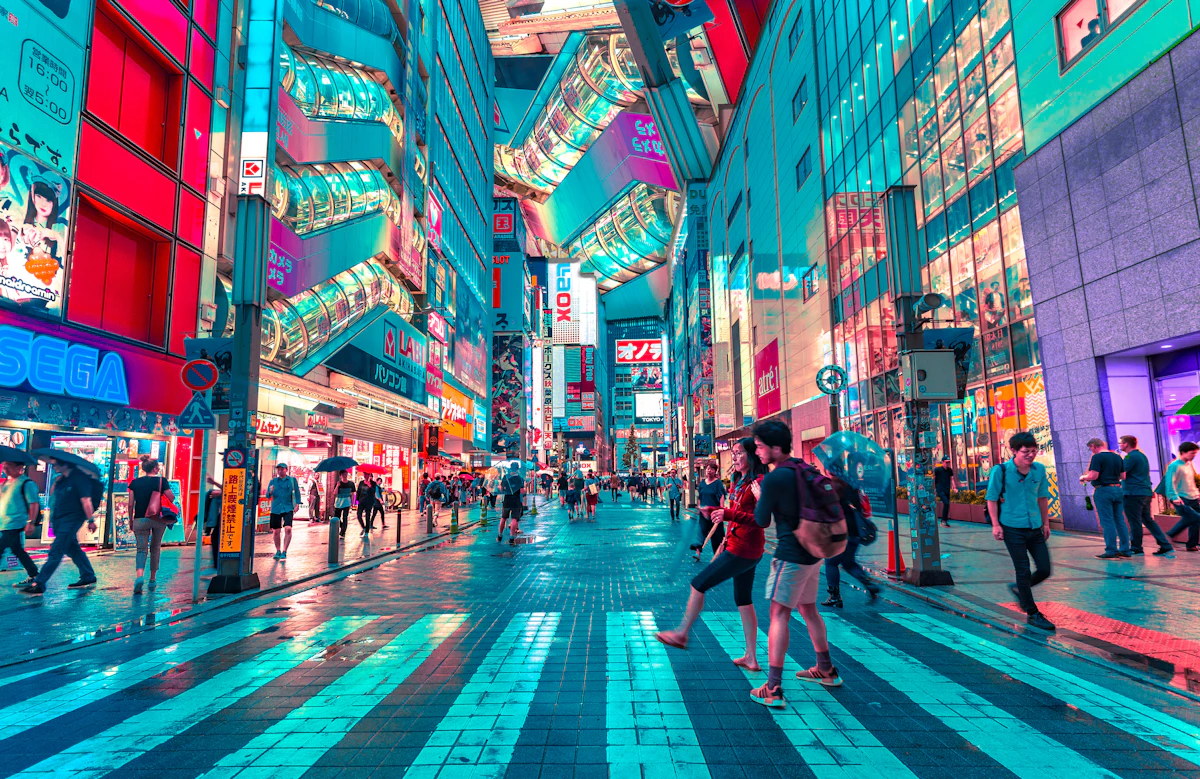
Japan is consistently ranked Australia’s favourite long-haul destination — and the numbers back it. Over 600,000 Australians visited Japan in 2023 alone, making Australia one of the country’s top five source markets. Direct flights from Sydney and Melbourne put Tokyo inside 10 hours, which is less than a red-eye to London and far more dramatic in payoff: bullet trains, vending machine culture, mountain shrines, and the best food street by street you’ll find anywhere in the world.
This guide cuts through the noise for first-timers: exactly what flights cost, what to budget in AUD, whether the Japan Rail Pass is actually worth it in 2026, and a realistic 10-day itinerary from Tokyo to Osaka.
Quick Verdict
- Best for: First-timers, foodies, culture travellers, couples, families
- Flights from Sydney: From AUD 700 return (ANA, Qantas); typical AUD 900–1,200
- Flight time: ~9h 30m direct (SYD), ~11h (MEL), ~10h 30m (BNE)
- Visa: Not required for Australian passport holders (up to 90 days)
- Daily budget: AUD 180–220 (budget) · AUD 300–450 (mid-range) · AUD 600+ (luxury)
- Currency: JPY. AUD 1 ≈ JPY 96–100 (mid-2026)
- Best months: March–May (cherry blossom), October–November (autumn foliage)
Flights from Australia to Japan
Three Australian cities have direct services to Tokyo (Narita NRT or Haneda HND). All flights operate non-stop in 2026.
| Route | Airlines | Cheapest return | Typical return | Flight time |
|---|---|---|---|---|
| Sydney (SYD) → Tokyo (NRT/HND) | Qantas, ANA, JAL | AUD 700 | AUD 900–1,200 | 9h 30m |
| Melbourne (MEL) → Tokyo (NRT) | Qantas, ANA | AUD 750 | AUD 950–1,300 | 11h 00m |
| Brisbane (BNE) → Tokyo (NRT) | Jetstar (seasonal), ANA | AUD 780 | AUD 1,000–1,400 | 10h 30m |
| Perth (PER) → Tokyo | Via Singapore or via SYD | AUD 820 | AUD 1,100–1,500 | 14–16h |
How to book cheaply: Flash sales on ANA and Qantas hit every 6–8 weeks. Set a price alert for SYD→NRT on Google Flights. The lowest prices typically land 3–5 months out; within 6 weeks of travel, fares rarely dip below AUD 1,100.
Osaka instead of Tokyo: Flying into Osaka (KIX) or Nagoya (NGO) via connecting through Singapore, Hong Kong, or Seoul adds 2–4 hours but can save AUD 150–300 return — worth considering if you’re planning a Kyoto-heavy itinerary.
Search and compare Japan flights from your city →
Japan Trip Budget in AUD
Japan has a reputation for being expensive, but it’s more honest than expensive — prices are clear, tipping is not a thing, and you know exactly what you’re paying. At AUD 1 ≈ JPY 97, here’s how the math actually lands.
Daily costs per person (AUD)
| Category | Budget | Mid-range | Luxury |
|---|---|---|---|
| Accommodation | AUD 60–90 (hostel/capsule) | AUD 130–200 (business hotel) | AUD 300–700 (ryokan/5-star) |
| Food | AUD 35–55 | AUD 70–100 | AUD 150–300 |
| Transport (local) | AUD 20–35 | AUD 25–40 | AUD 40–80+ |
| Activities/entry | AUD 15–30 | AUD 30–60 | AUD 60–150 |
| Daily total | AUD 130–210 | AUD 255–400 | AUD 550–1,200+ |
Add your flights (AUD 800–1,200) and the Japan Rail Pass if relevant (see below), and a 10-day trip for two runs:
- Budget: ~AUD 4,500–5,500 total per couple
- Mid-range: ~AUD 8,000–11,000 total per couple
- Luxury: AUD 15,000+
Use our currency converter to track AUD/JPY in real time before you book.
Best Time to Visit Japan from Australia
| Season | Months | What to expect | Crowd level |
|---|---|---|---|
| Spring | March–May | Cherry blossoms (late March–early April), warm 15–22°C | Very high in April |
| Early summer | May–June | Greenery, fewer tourists, slightly humid | Low–moderate |
| Summer | July–August | Hot, humid, 30–38°C; Golden Week is chaos | High |
| Autumn | Oct–November | Foliage peak, ideal hiking weather 15–22°C | High in November |
| Winter | Dec–February | Cold, ski season in Hokkaido/Nagano, fewer tourists | Low |
Best balance for Australians: May or October — you skip the peak tourist crush, weather is comfortable, and flights are 10–15% cheaper than cherry blossom season. Flying in June (Japan’s “rainy season”) cuts crowds further without much rainfall inconvenience if you’re city-focused.
Where to Stay in Japan
Tokyo is the base for most first-timers. Shinjuku and Shibuya are the most central and well-connected. Budget capsule hotels from AUD 50/night; mid-range business hotels (APA, Dormy Inn, Daiwa Roynet) from AUD 130/night.
Kyoto is where you stay for temples and traditional Japan. Prices run 20–30% above Tokyo equivalent quality. Book well ahead for autumn foliage weekends — hotels sell out 3–4 months in advance.
Osaka is the budget-friendly alternative to Kyoto with better street food (Dotonbori, Kuromon Market) and excellent nightlife. It also makes a cheaper base for Kyoto day trips (30 min on the shinkansen).
Ryokan experience: If budget allows, book 1–2 nights in a traditional inn. Expect futon bedding, kaiseki dinner, onsen baths, and rates from AUD 250–600 per person including meals. Gora (Hakone), Kinosaki Onsen, and Arima Onsen are the most accessible from Tokyo/Osaka.
Compare hotels in Tokyo and Osaka →
Japan Rail Pass: Is It Worth It in 2026?
After a significant price increase in October 2023, the JR Pass is no longer an automatic buy. Here’s the current pricing in AUD:
| Pass | Price (AUD approx.) | Best for |
|---|---|---|
| 7-day | AUD 490 | Tokyo → Kyoto → Osaka focus |
| 14-day | AUD 780 | Add Hiroshima, Nara, Hakone |
| 21-day | AUD 980 | Full country circuit including Hokkaido/Kyushu |
Worth it if: You’re doing Tokyo → Hakone → Kyoto → Hiroshima → Osaka in 10–14 days. A single Tokyo→Osaka shinkansen return costs ~AUD 310, so the 7-day pays off with 2–3 long routes.
Not worth it if: You’re staying in Tokyo or Osaka for most of the trip. A Suica/IC card + individual tickets are cheaper for city-heavy itineraries.
You can pre-purchase the JR Pass via Klook — it arrives before departure and you exchange it at the airport on arrival.
Getting Around: Airport Transfers
Tokyo — Narita Airport (NRT): The Narita Express (N’EX) runs to Shinjuku in 80 minutes. Single fare ~JPY 3,070 (~AUD 32). JR Pass holders ride free.
Tokyo — Haneda Airport (HND): 25–35 minutes from central Tokyo on the monorail or Keikyu Line. Much easier than Narita — useful if airlines offer both options at similar price.
Osaka — Kansai Airport (KIX): The Haruka Express to Osaka/Kyoto takes 75–90 minutes. ICOCA cards work on local lines. Book your Japan airport transfer before arriving — pre-booked private transfers from KIX start from AUD 45 and save the luggage-on-train hassle.
Tokyo: What to Do First
Don’t spread yourself too thin on Day 1–2. Tokyo rewards slow exploration over a checklist approach.
- Shibuya Scramble + Sky Deck — the crossing is free; the 230m Sky Deck at Shibuya Sky is AUD 25 and actually worth the price for the Tokyo panorama
- Tsukiji Outer Market — breakfast by 8am before crowds hit; budget AUD 15–20 for a tuna breakfast set
- Senso-ji Temple, Asakusa — arrive before 7:30am to skip tour groups; free entry
- TeamLab Borderless (reopened in Azabudai Hills, 2024) — digital art immersion; pre-book tickets from AUD 42
- Shinjuku Kabukicho + Golden Gai — for the evening; the latter is 6 narrow alleys of 200 tiny bars
Book day tours and Tsukiji fish market experiences through Klook — competitive pricing vs direct and everything is in English.
Explore the full Japan tours and experiences available from both Tokyo and Osaka.
Osaka, Kyoto & Beyond
Osaka (day 5–7 on a 10-day trip):
- Dotonbori street food — takoyaki (AUD 4), okonomiyaki (AUD 12), kushi-katsu (AUD 15)
- Osaka Castle (AUD 10 entry) — views from the observation deck > the castle museum
- Kuromon Ichiba Market — 170 stalls, best by 10am
Kyoto day trips from Osaka:
- Fushimi Inari — the 10,000 torii gates; free, but get there by 7am for the famous shots
- Arashiyama Bamboo Grove + Tenryu-ji temple — 30 min by train from Kyoto Station
- Nishiki Market (“Kyoto’s Kitchen”) — free to walk; budget AUD 20–30 for tastings
Hiroshima + Miyajima (half-day add-on from Osaka, ~90 min shinkansen): The Peace Memorial Museum (AUD 2 entry) and floating torii gate at Miyajima are the most affecting sites in Japan. Worth the detour if you have 2 days spare.
Japan eSIM: Stay Connected from the Moment You Land
Japan’s airport Wi-Fi is patchy and pocket Wi-Fi rental queues at Narita run 20–30 minutes. The clean solution: activate an eSIM before you board.
An Airalo Japan eSIM starts from AUD 9 for 1 GB / 7 days or AUD 25 for 20 GB / 30 days. It’s instant activation, works on all major Japan carriers, and your phone works the second you clear customs — no queue, no SIM swap.
Data usage tip: Google Maps offline + translation downloads use ~500 MB. If you’re navigating a lot, get the 3 GB or higher plan.
Travel Insurance for Japan
Japan’s healthcare is excellent but not cheap for foreign visitors. A single A&E visit runs JPY 15,000–50,000 (AUD 150–500) without insurance. A hospitalisation can hit AUD 2,000–5,000 per day.
Australians should never travel Japan uninsured. World Nomads covers adventure activities like skiing (Hokkaido, Nagano) and hiking — useful if you’re going beyond the cities. Standard single-trip Japan coverage from ~AUD 80 for a 10-day trip.
Compare options at our travel insurance page before you book.
A 10-Day Japan Itinerary from Australia
| Day | Location | What to do |
|---|---|---|
| Day 1 | Arrive Tokyo (NRT/HND) | Airport transfer → hotel check-in → Shinjuku evening walk |
| Day 2 | Tokyo | Tsukiji breakfast, Harajuku, Meiji Shrine, Shibuya Scramble |
| Day 3 | Tokyo | Asakusa, Ueno museums, TeamLab Borderless |
| Day 4 | Day trip: Nikko or Kamakura | Giant Buddha or ornate shrines; back to Tokyo by 7pm |
| Day 5 | Shinkansen Tokyo → Kyoto | Arrive midday; Fushimi Inari (afternoon beat the crowds) |
| Day 6 | Kyoto | Arashiyama, Kinkaku-ji (Golden Pavilion), Gion evening walk |
| Day 7 | Nara day trip | Giant deer, Todai-ji temple; back to Kyoto/Osaka by 6pm |
| Day 8 | Move to Osaka | Dotonbori lunch, Osaka Castle, Kuromon Market |
| Day 9 | Hiroshima + Miyajima | Day trip: Peace Museum + floating torii; return to Osaka |
| Day 10 | Depart Osaka (KIX) | Morning free; transfer to Kansai Airport |
Practical Japan Tips for Australians
- Cash is still king in rural areas, small restaurants, and temples. Carry JPY 10,000–20,000 (AUD 100–200) in cash at all times. 7-Eleven ATMs accept international Visa/Mastercard — the most reliable option.
- IC card (Suica/PASMO): Load money at any station machine for seamless subway travel. Works on buses, convenience stores, and vending machines too.
- Convenience stores are your friends: 7-Eleven, FamilyMart, and Lawson sell hot food, sandwiches, onigiri, and beer at AUD 2–5. Genuinely good.
- Google Translate camera mode — download the Japanese pack offline before you leave. Essential for menus.
- No tipping — ever. It can cause offence.
- Quiet carriages: Shinkansens have a quiet car; calls and loud conversations are not done.
Japan rewards the organised traveller and forgives the underprepared one — the infrastructure is too good for things to go badly wrong. Book your flights early (price drops happen 3–5 months out), get your JR Pass if you’re doing the full circuit, activate an eSIM before boarding, and leave a few days unplanned. The best Japan moments usually aren’t on any itinerary.
Start planning: search Japan flights →
Related Articles
Get the Best Fares First
Weekly deal alerts for Australian travellers. Unsubscribe anytime.
Plan Your Trip