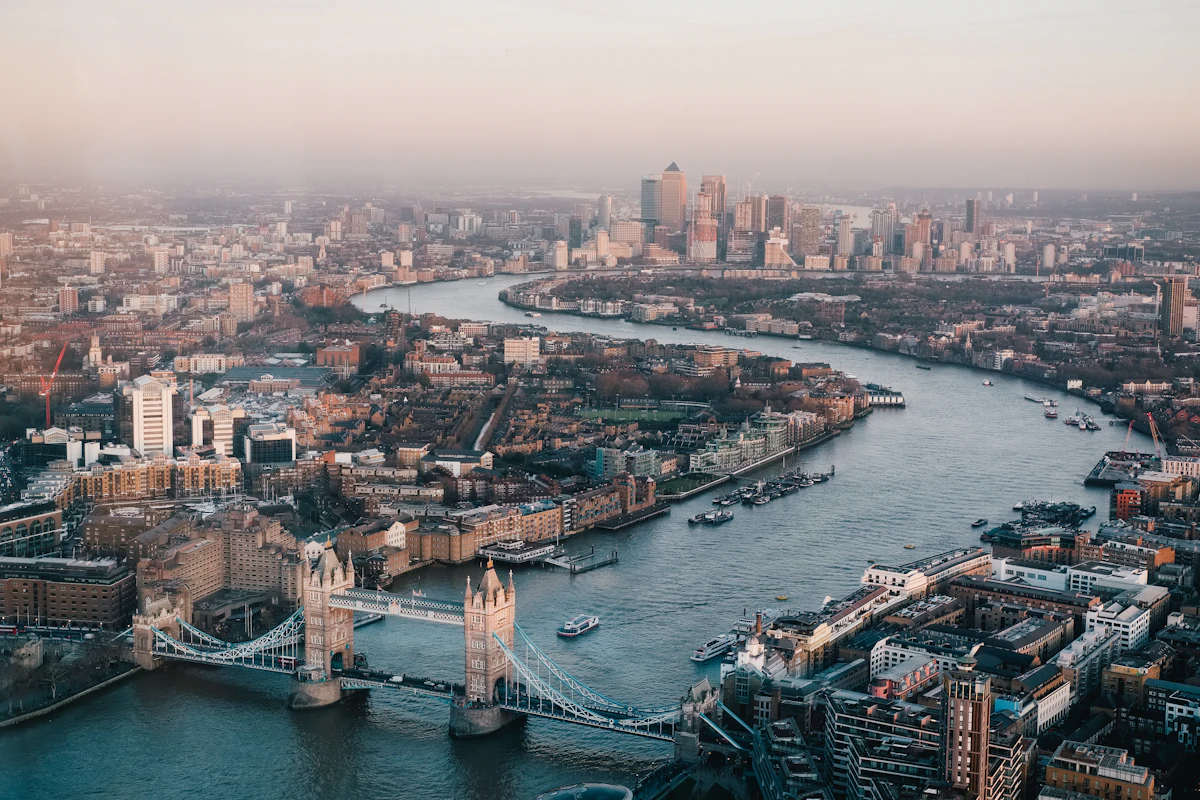
London is the single most visited city by Australians travelling overseas — and for good reason. It’s one of the few megacities where you land speaking the language, find an Aussie barista in every neighbourhood, and still feel like you’ve properly left home. The food has gotten genuinely good, the museums are free, and a long-haul flight from Sydney or Melbourne puts you there in 22–24 hours. This guide covers everything Australians need to plan a London trip in 2026: flights, the new UK ETA, real costs in AUD, the best time to go, and where to spend your days.
Quick Verdict
- Return flights from Sydney: A$1,200–A$2,600 economy
- UK ETA: Required — £10 online, takes minutes to apply
- Best time to visit: April–June (spring) or September–October (autumn)
- Daily budget: A$130–A$250 per person (accommodation + food + transport)
- Flight time: ~22 hours from Sydney, ~17 hours from Perth
- Currency: 1 GBP ≈ A$2.00 (mid-2026)
Flights from Australia to London
Every route from Australia to London Heathrow (LHR) involves at least one connection. The three most common hubs are Singapore, Dubai, and Doha — with Singapore being the fastest option from Sydney and Melbourne, and Dubai giving Perth travellers the shortest trip.
Key routes and flight times:
| Departure city | Quickest route | Airlines | Total time |
|---|---|---|---|
| Sydney (SYD) | via Singapore | Singapore Airlines / Qantas | ~22 hours |
| Melbourne (MEL) | via Singapore | Singapore Airlines | ~23 hours |
| Brisbane (BNE) | via Singapore or Dubai | SQ / Emirates | ~23–25 hours |
| Perth (PER) | via Dubai | Emirates | ~17 hours |
| Adelaide (ADL) | via Dubai | Emirates | ~21 hours |
Typical economy return fares (2026):
| Departure | Low season fare | Peak season fare |
|---|---|---|
| Sydney | A$1,200–A$1,600 | A$1,900–A$2,600 |
| Melbourne | A$1,250–A$1,700 | A$2,000–A$2,700 |
| Perth | A$1,100–A$1,500 | A$1,800–A$2,400 |
| Brisbane | A$1,350–A$1,750 | A$2,000–A$2,600 |
Low season is February–March and November. Avoid school holidays (July and December–January) if budget is a priority — fares spike A$400–A$600 above the base. Business class sits at A$4,500–A$9,000 return, with Qantas codeshares on the Singapore route offering solid value on points redemptions.
Search flights from Sydney to London Heathrow →
UK ETA: What Australians Need to Know in 2026
As of 2 April 2025, Australian passport holders must hold a UK Electronic Travel Authorisation (ETA) before travelling to the UK for stays of up to six months. This is not a visa — it’s pre-travel approval that links to your passport electronically.
ETA quick facts:
- Cost: £10 per person (approximately A$20)
- How to apply: Via the UKVI app (“UK Visas and Immigration”) or at gov.uk
- Processing time: Usually approved within hours; can take up to three working days
- Validity: 2 years or until your passport expires (whichever is sooner)
- Multiple entries: Yes — one ETA covers unlimited trips to the UK within its validity period
- Who needs it: Australians (and most non-EEA passport holders who previously could visit visa-free)
Apply before you book other elements of your trip — there’s no reason not to. The process takes under 10 minutes and approval is near-instant for Australian passport holders.
If you’re planning to work in the UK rather than visit, you need a Working Holiday visa (Youth Mobility Scheme), which is a separate application and costs £298 for up to two years. The ETA does not permit paid work.
Getting Around London
London’s transport network is excellent and straightforward once you understand it. The Oyster card (or a contactless bank card, which works identically) is the cheapest way to pay for the Tube, buses, Overground, and Elizabeth line.
Getting from Heathrow to central London:
| Option | Journey time | Cost |
|---|---|---|
| Elizabeth line (Tube) | 35–50 min to Liverpool Street | ~£12.80 (Oyster) |
| Heathrow Express | 15 min to Paddington | £25 single (book online for ~£12) |
| National Express coach | 50–80 min | £10–£16 |
| Taxi / Uber | 45–75 min | A$90–A$160 depending on traffic |
The Elizabeth line (opened 2022) is the best value — comfortable, fast, and direct to central stations. Book your Heathrow airport transfer in advance if you’re arriving late at night and want a guaranteed ride.
Stay connected from day one — an eSIM for the UK means you have data on the Tube before you leave the airport. Airalo UK eSIM starts from around A$12 for 3 GB and takes two minutes to activate on your phone.
Daily travel within London:
The fare cap system means you’ll never overpay regardless of how many Tube trips you take. A daily cap in zones 1–2 (covering most tourist areas) is £8.10. Weekly cap is £40.70 — if you’re staying seven or more days, you won’t spend more than that on public transport.
London Costs: What to Budget in AUD
London has a reputation for being expensive and it’s partly earned — the pound is strong against the Australian dollar (≈ A$2 per £1 in 2026). But the city also has more free world-class attractions than almost anywhere on earth.
Accommodation per night:
| Type | Cost in AUD |
|---|---|
| Hostel dorm | A$50–A$90 |
| Budget private hotel | A$160–A$250 |
| Mid-range 3-star | A$280–A$420 |
| 4-star central London | A$450–A$700 |
Search London hotels → and sort by neighbourhood — Shoreditch and Bethnal Green run A$60–A$80 cheaper per night than Kensington for equivalent quality.
Food costs:
- Meal deal (sandwich + drink + crisps from a supermarket): A$10–A$14
- Pub lunch main: A$28–A$40
- Sit-down restaurant, two courses: A$55–A$90 per person
- Borough Market street food: A$16–A$28 per dish
- Pint of beer in a pub: A$12–A$18
Attractions — free vs paid:
London’s free museums are genuinely world-class — many travellers fill two or three days without spending a pound on entry fees.
| Attraction | Cost |
|---|---|
| British Museum | Free |
| National Gallery, Trafalgar Square | Free |
| Tate Modern | Free |
| Natural History Museum | Free |
| Victoria & Albert Museum | Free |
| Tower of London | A$60 (book online for ~£32) |
| Tower Bridge Exhibition | A$30 |
| Kew Gardens | A$50 |
| Churchill War Rooms | A$58 |
Realistic daily spend:
| Budget type | AUD per person per day |
|---|---|
| Budget (hostel, supermarkets, free attractions) | A$100–A$150 |
| Mid-range (3-star hotel, mix of restaurants + free attractions) | A$220–A$320 |
| Comfortable (4-star, restaurants, a few paid attractions) | A$380–A$500 |
Best Time to Visit London from Australia
Spring (April–June): The best all-round time. Days are long (up to 17 hours of daylight by June), parks are in bloom, and crowds haven’t peaked. Chelsea Flower Show in May and Trooping the Colour in June are highlights. Temperatures: 14–22°C.
Summer (July–August): Warmest and most expensive. Hyde Park and Notting Hill Carnival (late August) are buzzing but expect queues at popular sites and premium hotel rates. Temperatures: 18–26°C. Avoid if budget is tight.
Autumn (September–October): A strong second choice. Crowds thin out, prices drop, and the city looks genuinely beautiful with autumn foliage. Temperatures: 10–18°C. Slightly wetter than spring.
Winter (November–March): Cold (2–9°C) and grey, but Christmas markets in December (Hyde Park Winter Wonderland, Southbank) are worth a visit. January–February is the cheapest time to fly and stay. Pack for cold and pack layers.
Where to Stay in London
Kensington / South Kensington: The classic tourist base. Walking distance to Hyde Park, Natural History Museum, Victoria & Albert Museum, and Harrods. Pricier but very convenient.
Shoreditch / Bethnal Green: East London’s creative hub. Younger crowd, better coffee, more interesting street food. Good transport links into the City and central areas. A$60–A$100 cheaper per night than Kensington.
Covent Garden: Central, lively, surrounded by theatres and restaurants. Compact and walkable. Tends to be noisy — request a room away from the street if you’re a light sleeper.
London Bridge / Borough Market area: Great for food explorers. Borough Market (open Thu–Sat) is 10 minutes’ walk from the Tower of London. Mid-range hotels in the A$240–A$380 bracket.
Top Things to Do
Free London:
- British Museum — the Rosetta Stone, Egyptian mummies, Elgin Marbles: allow 3 hours
- Tate Modern — contemporary art in a converted power station, with a great Thames view from the top
- Walk the South Bank from Waterloo to Tower Bridge (~3 km, 45 min easy)
- Borough Market on a Saturday morning
- Regent’s Park in any season
Paid but worth it:
- Tower of London — Crown Jewels + Beefeaters, book online to skip the queue (around A$60)
- West End show — book tickets 4–6 weeks ahead for best prices (A$60–A$180)
- Harry Potter Studio Tour — 45 min by train from Euston, book months ahead (A$85)
- Wimbledon (late June–early July) if you’re there at the right time — ground passes via public ballot from A$30
Day trips from London:
| Destination | Travel time | Cost return | Best for |
|---|---|---|---|
| Bath | 1.5 h by train | A$70–A$100 | Roman Baths, architecture |
| Windsor Castle | 50 min by train | A$25 train + A$50 entry | Royal history |
| Stonehenge | 1.5 h by train + shuttle | A$30 train + A$45 entry | Ancient history |
| Oxford | 1 h by coach or train | A$30–A$50 | University architecture, pubs |
| Edinburgh | 4.5 h by train | A$80–A$160 | Full overnight trip recommended |
Travel Insurance for the UK
The UK has no reciprocal health agreement with Australia (unlike New Zealand). If you need emergency medical care in London, you will be charged as an overseas visitor — a single night in hospital can cost thousands of AUD. Travel insurance covering medical expenses is essential.
Compare travel insurance for your UK trip →
World Nomads offers solid coverage for Australians including adventure activities, cancellation, and medical. Get a World Nomads quote →
London at a Glance: Key Facts for Australians
| Currency | British Pound (GBP) — ≈ A$2.00 |
| Time zone | GMT (AEDT is GMT+11; London is 11 hours behind Sydney in winter, 10 in summer) |
| Plug type | UK three-pin (Type G) — bring an adaptor |
| Emergency number | 999 (police, ambulance, fire) |
| Driving | Left-hand traffic (same as Australia) |
| Tipping | Not obligatory; 10–12% in restaurants is standard |
| Best apps | Citymapper (transport), TfL (Tube status), Google Maps |
London rewards the traveller who goes beyond the obvious postcard circuit — the free museums alone justify the long flight, and the neighbourhoods east of the City of Westminster are some of the most interesting urban spaces in Europe. Spring is the best time to go, April is the sweet spot for price and weather, and Perth travellers have the shortest hop via Dubai to get there.
Use the AI trip planner to build your London itinerary →
Related Articles
Get the Best Fares First
Weekly deal alerts for Australian travellers. Unsubscribe anytime.
Plan Your Trip